
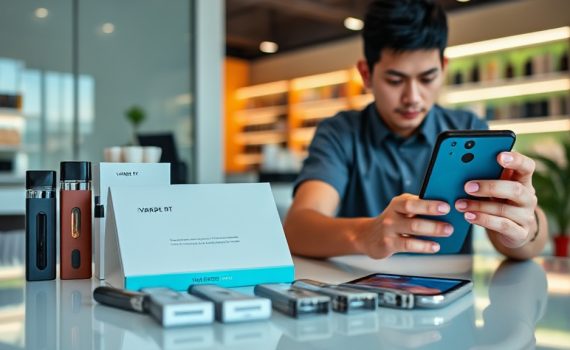
Upstream: How Vape Stock Reaches a Singapore Delivery Retailer
Category : E-Commerce
Upstream: How Vape Stock Reaches a Singapore Delivery Retailer
When a customer taps order and a courier arrives within hours, they see only the final step of a long chain. Behind that convenience sits a sequence of sourcing decisions, inbound logistics, customs handling, warehousing and local replenishment that determines what is actually available. This article traces that chain for SG Vape same day delivery and explains how upstream constraints shape the stock buyers see.
The invisible upstream behind every fast delivery
Same-day delivery feels local, but the products themselves are rarely made in Singapore. Disposable vapes and pod systems are manufactured in factories abroad, then move through distributors, freight forwarders and importers before reaching a local retailer. The speed customers experience at checkout is the result of inventory already sitting in a warehouse, not of products being rushed from overseas.
A delivery retailer like Vape SG Delivery Now depends on a network of vape supplier singapore partners and regional distributors to keep popular SKUs in stock. When those upstream links are stable, same-day delivery works smoothly. When they are not, the customer sees it as a missing flavour or a delayed dispatch.
The chain has four broad stages: sourcing and procurement, inbound freight, local storage and replenishment, and last-mile dispatch. Each stage introduces its own lead times, costs and risks. Understanding them explains why some products are consistently available while others appear and disappear.
Stage one: sourcing and procurement decisions
Sourcing is where availability begins. A retailer must decide which brands and models to carry, how much to order, and from which authorised channels. For disposable products, the choices often include established names such as Lana Bar 5000 Puffs, Lana Blend 5000 Puffs, RELX pod systems and Elfbar devices. Each brand has its own distributor network and minimum order quantities.
Authenticity is a major constraint. Products sourced through grey channels may be cheaper but carry higher risk of counterfeits and inconsistent quality. Retailers that commit to original pods and disposables typically pay more and accept longer lead times in exchange for reliability. That trade-off directly affects what appears in the online catalogue.
How product mix is chosen
Buyers do not order every SKU in equal volume. Demand data from previous months, customer requests and seasonal patterns guide the mix. A retailer might stock deeper on a few high-turnover flavours and carry limited quantities of niche options. This is why Sg vape disposable listings often show a focused range rather than an exhaustive catalogue.
Minimum order quantities from manufacturers also shape the mix. If a supplier requires a large batch of a single flavour, the retailer must either commit to that volume or skip the product. Smaller retailers therefore tend to concentrate on proven sellers.
Stage two: inbound freight and customs handling
Once an order is placed, products move by air or sea freight. Air freight is faster but more expensive, while sea freight reduces cost per unit but adds weeks to the timeline. Perishability is not an issue for vape hardware, but battery regulations and packaging requirements add complexity to shipping.
Customs clearance is the most unpredictable link. Documentation errors, inspections or changes in import rules can hold a shipment for days. A retailer cannot sell what is stuck at the border, so a single delayed container can ripple through the entire local inventory plan.
Freight forwarders and customs brokers play a quiet but critical role. They prepare paperwork, classify goods correctly and coordinate with authorities. Retailers that maintain strong relationships with these partners experience fewer surprises and can give customers more reliable Singapore vape delivery timelines.
Stage three: local storage and replenishment
After clearance, products enter local storage. Warehousing in Singapore is expensive, so retailers must balance holding enough stock to fulfil same-day orders against the cost of unsold inventory. Fast-moving items get priority shelf space; slow movers may be discontinued.
Replenishment is a continuous cycle. When stock for a popular product such as Lana Bar 5000 Puffs drops below a threshold, a new order is triggered. The lead time from that trigger to available stock depends on the supplier’s own inventory and shipping schedule. If the supplier is out of stock, the retailer cannot restock until the next production run.
Why some products go out of stock
Out-of-stock situations usually trace back to one of three causes: a supplier shortage, a shipping delay, or a demand spike that outpaces the forecast. Retailers can mitigate the first two by diversifying suppliers, but demand spikes are harder to predict. When a new flavour gains sudden popularity, the upstream chain may take weeks to catch up.
This is why customers sometimes find that their preferred sg vape lana variant is unavailable for a period. It is rarely a local decision; it is a signal that the upstream supply has not yet adjusted.
Stage four: last-mile dispatch and the same-day promise
The final stage is the one customers see. Once an order is placed, the retailer picks, packs and hands it to a courier. Discreet packaging is standard, and delivery windows are tight. This stage depends entirely on the stock already sitting in the warehouse.
Same-day delivery is therefore a promise about local inventory, not about shipping speed from overseas. A retailer can only offer it for products that are physically in stock at the time of order. If a product is available for sg vape delivery today, it means the upstream chain delivered it days or weeks earlier.
Courier capacity is another constraint. Peak periods, bad weather or public holidays can stretch delivery times. Retailers manage this by setting realistic cut-off times and communicating clearly when a same-day slot is no longer available.
How upstream constraints show up in what buyers see
Buyers notice the effects of the upstream chain in several concrete ways. Product pages may show limited stock, certain flavours may disappear, or delivery estimates may shift. These are not random; they are the visible surface of sourcing, freight and warehousing decisions.
For example, a retailer that prioritises authentic products may have fewer SKUs than a competitor that sources broadly. That is a deliberate trade-off. Customers who value consistency often prefer a narrower, reliable range over a wide but unpredictable one. The same logic applies to lana vape delivery: availability reflects how well the upstream chain is managed.
Price is also affected. Freight costs, customs duties and warehousing expenses all feed into the final price. When upstream costs rise, retailers must decide whether to absorb them or pass them on. This is why prices for the same product can vary between sellers.
What a well-managed chain looks like
A well-managed chain shows up as consistent stock for core products, realistic delivery windows and clear communication when something is unavailable. It also means fewer surprises: customers learn which products they can rely on and plan accordingly.
Retailers achieve this by forecasting demand carefully, maintaining buffer stock for top sellers, and building relationships with multiple suppliers. They also monitor lead times and adjust order quantities as conditions change. The result is a smoother experience at checkout, even though the customer never sees the work behind it.
In the end, same-day delivery is a local service built on a global chain. The next time an order arrives within hours, it is worth remembering the sourcing decisions, freight movements and warehouse planning that made it possible. The visible speed is the last link; the invisible upstream is what holds it together.