
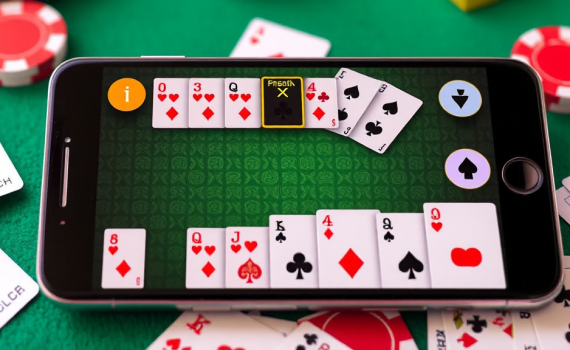
Online Rummy Game: A Beginner’s Guide to Rules, Skills, and Smart App Choices
Category : Gaming
Online Rummy Game: A Beginner’s Guide to Rules, Skills, and Smart App Choices
Rummy has been a household card game for generations, and the online rummy game has carried that tradition into the digital space. Whether you grew up watching family members shuffle and deal around a dining table or you are discovering the game for the first time, the online version offers a convenient way to learn the rules, practice your strategy, and enjoy a few hands whenever you have spare time. This guide walks you through what the game involves, how it differs from other card games, and how to choose an app that suits your comfort level.
If you are looking for a curated starting point, Online Rummy Game listings can help you compare Android rummy-style apps side by side. That kind of directory approach saves time and helps you understand what each app offers before you commit to installing anything.
What Exactly Is an Online Rummy Game?
At its core, rummy is a matching and melding card game. Players receive a hand of cards and work to arrange them into valid combinations, usually sequences and sets, before their opponents do. In the online version, the same logic applies, but the dealing, sorting, and validation happen automatically. That means you can focus on the decision-making rather than on shuffling or scorekeeping.
Most online rummy games follow a few popular formats. Points rummy is the classic version where each player’s score is based on the value of ungrouped cards. Pool rummy is played over multiple deals with a fixed point limit, and the player who stays under that limit wins. Deals rummy is a best-of-series format where each deal counts toward a final tally. Understanding which format you are playing matters because the strategy shifts slightly depending on whether you are trying to minimize points or win individual deals.
The digital format also introduces features that a physical deck cannot match. You can sort your cards with a single tap, see suggested groupings, and review your discard history. Some apps include practice tables where you can play against computer opponents before joining a real table. These tools are especially helpful for newcomers who want to learn without the pressure of a timed match.
Core Rules Every New Player Should Understand
The rules of rummy are relatively simple once you break them down. A standard deck of 52 cards is used, and each player is dealt a set number of cards, often 13. The remaining cards form a draw pile, and one card is turned face up to start the discard pile. On your turn, you draw a card from either pile and then discard one card from your hand. The goal is to arrange all your cards into valid melds.
A valid meld is either a set of three or four cards of the same rank but different suits, or a sequence of three or more consecutive cards of the same suit. A pure sequence contains no joker, while an impure sequence uses a joker to fill a gap. Most rule sets require at least one pure sequence before you can declare your hand. Jokers, whether printed on the deck or chosen from a randomly selected card, act as wild cards that can substitute for any card you need.
Declaring your hand correctly is the final step. You must arrange your cards into valid melds and show them. If your declaration is valid, you win the deal. If it is invalid, you may receive a penalty. Online platforms usually highlight valid and invalid melds automatically, which reduces the chance of a simple mistake ruining an otherwise good hand.
Skills That Separate Casual Players from Consistent Winners
Rummy is often described as a game of skill, and that description holds up when you watch experienced players. The first skill is observation. Pay attention to which cards your opponents pick up and discard. If a player discards a card that could have completed a sequence, they probably do not need that suit. Over several turns, these small clues add up to a picture of what everyone else is holding.
The second skill is hand management. Beginners tend to hold onto too many unrelated cards, hoping to draw the perfect match. Strong players evaluate their hand early and decide which melds to pursue. They also know when to break a potential set to complete a sequence that is closer to finished. This kind of flexibility is what keeps a hand from stalling.
The third skill is patience with jokers. A joker is a powerful tool, but using it too early can leave you without a wild card when you need one most. Experienced players often save a joker for the final meld or for a situation where it unlocks a pure sequence. Finally, there is the matter of timing your declaration. Declaring too early with a weak hand can backfire, while waiting too long gives opponents a chance to finish first. Learning to read the table and trust your judgment is a skill that improves with every deal.
How to Choose a Rummy App Wisely
The app you choose shapes your experience. A well-designed rummy app should have clear rules, smooth controls, and a readable interface. Before installing anything, check the app’s rating and read a few user reviews. Look for comments about stability, customer support, and whether the rules match the format you want to play. A directory that lists Android rummy-style apps with details like bonuses, ratings, and withdrawal pointers can make this comparison much easier.
Consider the size of the app and whether it runs well on your device. Some apps are lightweight and load quickly, while others include animations and sound effects that may slow down older phones. If you plan to play for longer sessions, battery usage matters too. It also helps to check whether the app offers a practice mode. Being able to play a few hands without pressure is one of the best ways to learn the game.
Another factor is the community. Some apps have active chat features and tournaments, while others focus on quiet, single-player practice. Neither approach is wrong, but your preference should guide your choice. If you enjoy a social atmosphere, look for apps with lobbies and leaderboards. If you prefer to focus on your own game, a simpler interface may be more enjoyable.
Common Mistakes Beginners Make
One of the most common mistakes is ignoring the discard pile. New players often draw only from the closed pile because they want a surprise card. But the discard pile tells a story. If you see a card you need, taking it is usually better than hoping for a lucky draw. Another mistake is holding too many high-value cards. Cards like kings, queens, and aces carry more points, so leaving them unmelded can hurt your score if you lose the deal.
Players also tend to forget about the pure sequence requirement. Many rule sets require at least one pure sequence before a valid declaration. If you build a hand full of impure sequences and sets, you may not be able to declare even if all your cards are grouped. Always keep an eye on whether you have a clean sequence available.
Finally, beginners often play too fast. Online games can move quickly, and the timer adds pressure. Taking a moment to review your hand before discarding can prevent costly errors. Speed comes with experience, so give yourself permission to think.
Practicing Responsibly and Building Good Habits
Any card game is more enjoyable when played responsibly. Set a time limit for your sessions and take breaks between deals. If you are playing on an app that involves in-app purchases or bonuses, read the terms carefully and understand what you are agreeing to. Keep your account information secure and use a strong password. These habits protect your experience and help you stay in control.
It also helps to track your progress. Many apps show statistics like win rate, average points, and number of deals played. Reviewing these numbers can reveal patterns. If you notice that you lose more often when you chase sets instead of sequences, you can adjust your strategy. Improvement in rummy comes from small, consistent adjustments rather than dramatic changes.
Remember that rummy is meant to be fun. If a session stops being enjoyable, step away and come back later. The skills you build over time will still be there, and a clear mind often plays better than a tired one.
FAQ
Is rummy a game of luck or skill?
Rummy involves both, but skill plays a major role. The cards you receive are random, but how you arrange them, which cards you discard, and when you declare are all decisions within your control. Experienced players consistently outperform beginners because they make better use of the information available.
How many cards are dealt in a typical online rummy game?
Most formats deal 13 cards to each player. Some variations use fewer cards depending on the number of players and the specific rules of the app. Always check the rules section of the app you are using.
What is a pure sequence and why does it matter?
A pure sequence is three or more consecutive cards of the same suit with no joker involved. Many rule sets require at least one pure sequence before you can make a valid declaration, so it is important to build one early in the deal.
Can I practice rummy without playing against real opponents?
Yes. Many apps include practice tables or single-player modes where you can play against computer opponents. This is a great way to learn the rules and test strategies before joining a live table.
What should I look for in a rummy app?
Look for clear rules, a stable interface, good user reviews, and a practice mode. A curated listing that compares Android rummy-style apps can help you evaluate bonuses, ratings, and other details in one place.